
At Paris Creator Week, LinkedIn's VP Global Editorial laid out where the platform is heading. For a professional services firm, the message is that its people, not its company page, are the channel.
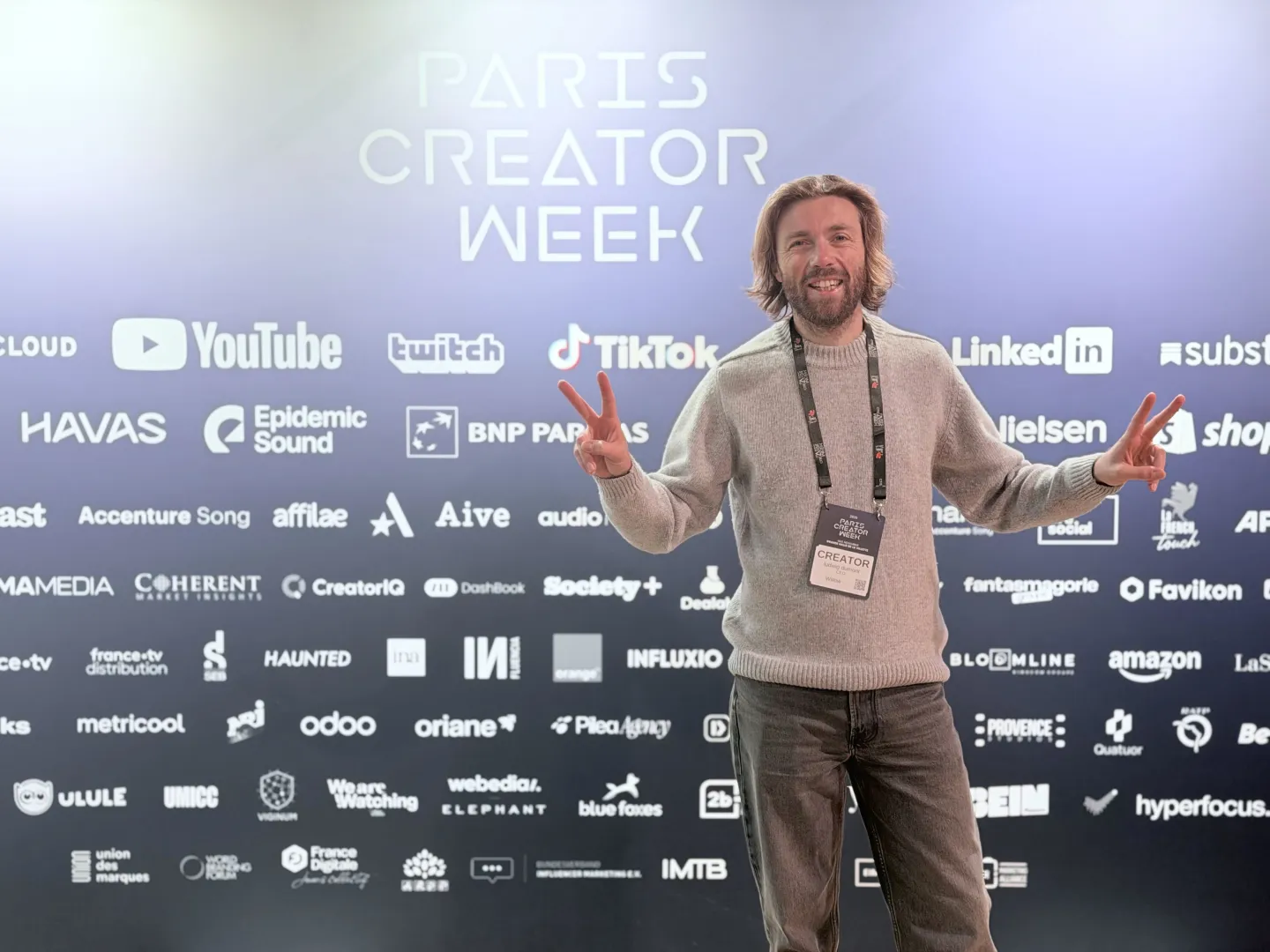
On 4 November I sat in on a session at Paris Creator Week with Laura Lorenzetti, VP Global Editorial at LinkedIn. Strip away the creator-economy vocabulary and the message for a law firm, accounting firm or consultancy in the Benelux is simple: the people, not the company page, are the channel, and the window to build that presence is open now.
The numbers LinkedIn shared
Two creators made the same point with their own income:
- US entertainment creator Sarah Whittle is on YouTube, TikTok and Instagram, yet 60% of her brand deals come from her LinkedIn content.
- “Corporate Natalie” (315,000 followers) says LinkedIn drives 15% of her income, three years after she started posting.
One caveat before you quote these: they are LinkedIn's own figures, shared on a LinkedIn stage. The direction is credible; the precision is marketing.
Nobody wants to hear from the brand page
Lorenzetti said it almost in passing, describing what executives are realising:
“Nobody really wants to hear from a brand page anymore. They want to hear from people they trust.”Laura Lorenzetti, LinkedIn
Two things follow. Executives are becoming creators, and creators are becoming executives and founders. The brand is increasingly embodied by a person.
For a professional services firm this is the whole game. Your company page is the lobby. Your partners, managers and specialists are the people clients actually want to hear from. A firm where five partners each post once a week will outperform a firm with a polished page and silent people, every time.
The French panel host noted the same shift at home: CEOs of large French companies now show up on YouTube and LinkedIn, drop the corporate language, and “give a human face to the big company”. That is no longer a US-only pattern.
Talk about what you know. The business follows.
Every success story on stage had the same shape: someone with real expertise started sharing it, built credibility, and then a business grew around it.
- Amandine Bart started posting about SEO and growth marketing while employed at a large company. She now runs her own agency with ten people.
- Caroline Mignaux was 30 and between jobs when she started posting about what she knew. She has since built three businesses off that audience.
- Casey Rickey, a graphic artist, posted his work and his process. He went from a few hundred dollars per painting to five figures, and to clients like Google and Shopify.
“What you think might not be interesting is very interesting and new for so many people.”Laura Lorenzetti, LinkedIn
The host added that he started by posting about video games, assumed nobody cared, and was wrong.
This is the objection we hear most from lawyers and accountants: “what I do is too technical, nobody wants to read about it.” The opposite is true. The things that feel obvious to you after fifteen years in the field are exactly what your clients cannot find anywhere else.
Authenticity is the reaction to AI content
The first trend Lorenzetti named for the coming years was “a massive rise in a desire and drive for authenticity”. Audiences demand it, and creators see a business need for it. Part of that is brand trust: promote something you don't stand behind and people stop trusting you.
The bigger driver is AI. In her words, AI content is:
“Super glossy, it sounds very good, it seems very good, but it can oftentimes feel vapid, lacking real depth and experience.”Laura Lorenzetti, LinkedIn
The creator reaction is to show the messy stuff: how they failed, what went wrong, what they actually think. Real talk, a bit of grit, occasionally a bit of snark. “You don't need to be cringe or glossy.”
The host shared his own version. When he has had bad buzz, he posted a human explanation of how he saw the situation and why he made the choices he made. “People always forgive you when you are a human. If they see you as a company, they expect you to be perfect.”
Our take at Willow: AI is a fine writing assistant and a terrible author. Use it to get the draft out of your head faster. Never let it decide what you think. The post has to carry your experience, your examples and your opinion, or the feed will treat it as noise.
The comments are the secret sauce
Asked for her three tips, Lorenzetti gave the expected two (get clear on your niche, get started) and then one she called her “secret sauce”: go to the comments. Reply to the people who respond to you. Go to other creators' posts and leave a thoughtful comment, one you actually spent time on. That is what creates “side chats, conversations, networks”, and what LinkedIn sees driving real economic outcomes.
The host backed it with a number: a single comment he left on a post about M&A in the creator economy did 150,000 views. LinkedIn is, as far as he knows, the only platform that shows you views on a comment.
Most firms we work with treat LinkedIn as a publishing channel: post, done. The half of the work that builds relationships is in the replies and in showing up on other people's posts. Fifteen minutes a day of real comments beats a second post a week.
Consistency beats perfection
“Don't assume you're going to publish one post and it will happen, though it has happened to people.” Consistency builds the audience over time. Lorenzetti's second tip was blunt: just start, because “too many times we let perfection be the enemy of doing something”. You will not love your first posts. You get better with reps.
Corporate Natalie, in a video message from San Francisco, went further:
“Don't think on it, don't let it sit in your drafts.”Corporate Natalie
A post can be one sentence now, almost tweet-style. She called it “the easiest time to become a creator on the platform” and posts five times a week.
For a firm, this means the cadence matters more than the individual post. One partner posting twice a week for a year will be a name in their niche. The same partner polishing one long article per quarter will not.
What's coming to Europe
Lorenzetti framed LinkedIn's edge in one word: intent.
“The intent is coming here to make deals.”Laura Lorenzetti, LinkedIn
Brand managers, PR teams, CEOs, employers and future employees are on the platform to do business, which is why the same content earns more trust here than on Twitch or TikTok.
Two US products are being prepared for Europe, with France named as next:
- Creator marketplace: a back-end where a brand filters creators by topic and audience size and starts deals directly.
- BrandLink: companies buy pre-roll ads in front of creator videos and the creator shares in the revenue. Some US creators make tens of thousands of dollars per post this way.
The marketplace matters more for our clients than BrandLink. Once a buyer can search “accounting, Belgium, 5,000+ followers” and get a list, the firms whose people have built an audience become findable in a way a company page never will be.
What this means for your firm
- Decide who speaks. Pick two to five people with real expertise and the willingness to show up, not the marketing coordinator.
- Give each of them a niche. One topic they can own for a year: VAT for e-commerce, dismissal law, succession planning. Narrow beats broad.
- Set a cadence you can keep. Two posts a week per person, no exceptions, no polishing beyond a second read.
- Budget time for comments. Fifteen minutes a day replying and commenting on peers' and clients' posts.
- Use AI for speed, not for substance. The draft can come from a tool; the opinion, the example and the mistake have to come from you.
The creator economy sounds like something for influencers. What LinkedIn described is simply the firm of the future: known through its people, trusted because those people say what they think, and found because they kept showing up.
Based on the session “Tout ce que vous vouliez savoir sur LinkedIn (mais que vous n'avez jamais osé demander)” with Laura Lorenzetti, VP Global Editorial at LinkedIn, at Paris Creator Week, Grande Halle de la Villette, 4 November 2026. Quotes are from our own recording of the session. Event: pariscreatorweek.com and Paris Creator Week on LinkedIn. Programme overview: CNC, Les temps forts de la Paris Creator Week 2026.