
Personal profiles reach further on LinkedIn, but that does not make the company page useless. Here is what each one is for, and how a page-first firm gets the best of both.
After our recap of Paris Creator Week, a colleague pushed back. Many firms we work with post only from the company page. Some of their partners will never post on their own. Are we telling them they might as well not bother?
No. But the question deserves a proper answer, because the numbers LinkedIn shared are hard to ignore.
What LinkedIn told us
On stage in Paris, Laura Lorenzetti, VP Global Editorial at LinkedIn, put it bluntly:
“Nobody really wants to hear from a brand page anymore. They want to hear from people they trust.”Laura Lorenzetti, LinkedIn
In a follow-up, LinkedIn's editorial team told us that on average a CEO's post gets seven times the visibility of the same post from the company page.
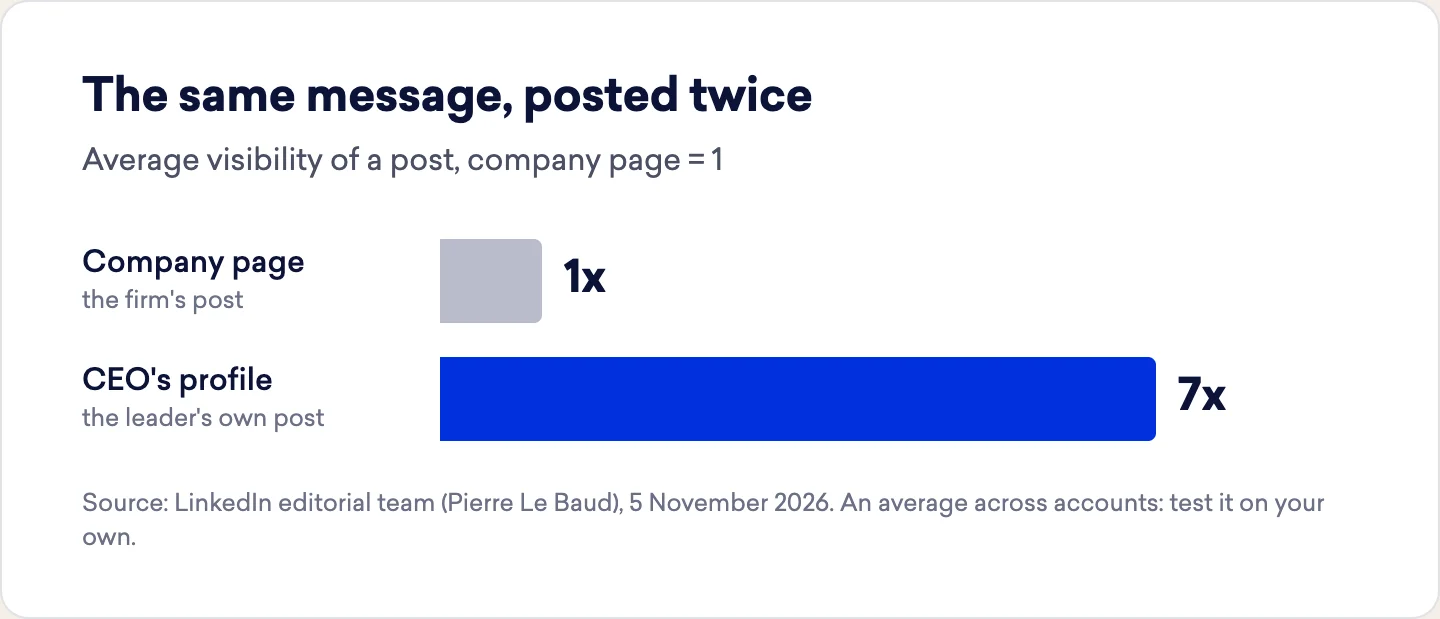
Both are true, and both are about reach. Reach is one job. A company page does several others that no personal profile can do.
What only the company page can do
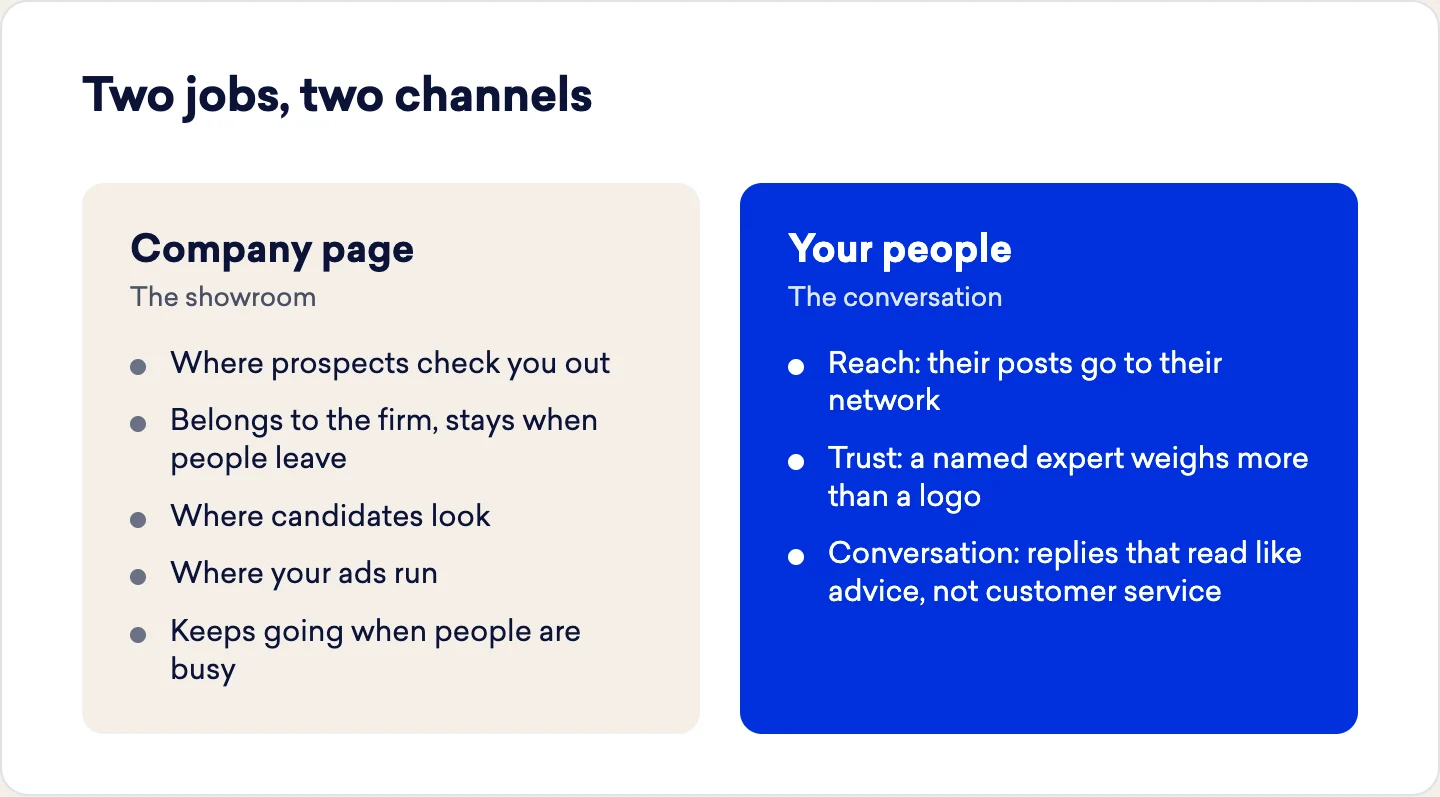
- It is where people check you out. A prospect hears a partner speak, likes what they hear, and clicks through to the firm. An empty or stale page at that moment costs you more than a quiet week ever would.
- It belongs to the firm, not to one person. Partners retire, managers move on. Case studies, team news, events and expertise collected on the page stay when people leave.
- It is where candidates look. Before a junior lawyer or accountant applies, they scroll your page to see what it is like to work there.
- It is where your ads live. Sponsored content runs from the page. LinkedIn's Thought Leader Ads also let the page put budget behind a post written by one of your people, so the two work together.
- It keeps going when people are busy. In tax season, nobody in the firm writes a post. The page still can.
What only your people can do
- Reach. LinkedIn shows a person's posts to their network, and those networks are made of the clients, referrers and peers you want to reach.
- Trust. A view from a named partner carries more weight than the same sentence under a logo.
- Conversation. When a page replies to a comment, it reads like customer service. When a partner replies, it reads like advice. That is where new work starts.
Showroom and conversation
Think of the company page as the shop window. It shows what you do and that you are open for business, and it should look good. But hardly anyone buys from a window. They buy after they have talked to someone inside.

On LinkedIn, your people are the ones inside. You need the window to be clean and the people to be talking.
For page-first firms: five ways to get people involved without forcing anyone
- Keep the page alive. One or two posts a week on the page is the baseline. Don't let it go quiet while you work on profiles. Our analysis of 43,738 company page posts shows why steady beats occasional.
- Put faces on the page. Build page posts around a named expert: their quote, their photo, their view, with a tag. It is the easiest way to give people a presence they did not have to write themselves.
- Ask the reluctant ones for one small thing. Not a post, a reshare with one sentence of their own. A reshare with a personal line reaches their network, and a plain repost mostly doesn't.
- Ask for comments, not posts. Five minutes a day commenting on clients' and peers' posts builds more visibility than most people expect. In Paris, Lorenzetti called the comments her “secret sauce”: that is where the side chats, conversations and networks form.
- Let one volunteer go further. There is almost always one person who wants to post. Give them a topic and support, and let the results convince the rest. We wrote about that step in the executive creator.
An example from our own page: when NieuweStroom launched a new product, 18 employees each posted their own take on it, in their own words, to their own network.
And one from our team: Ali's post about visiting a customer for their Willow Create onboarding, written on his own profile and reshared by the Willow page. It did better than anything the page posted itself that month.
With Willow, page posts and personal posts run in the same calendar, and Willow Create drafts both from the same input. One expert interview can become a page post this week and a partner post next week.
The short answer
Keep the company page. Make it the place where your firm looks its best. Then make sure some of your people are talking, because that is where LinkedIn sends the reach and where clients decide whom to call.
Sources: session with Laura Lorenzetti (LinkedIn) at Paris Creator Week, 4 November 2026; written answers from LinkedIn's editorial team, 5 November 2026. The 7x figure is LinkedIn's average; your own results will vary.