
If 8,900 followers puts you in the top three of a Belgian niche, what does that mean for a law firm or an accounting practice? On LinkedIn, B2B is a quality game, not a volume game.
A ranking I didn't expect
A month ago, Favikon ranked me third among Belgian social media experts on LinkedIn. I have 8,900 followers. Not 89,000.
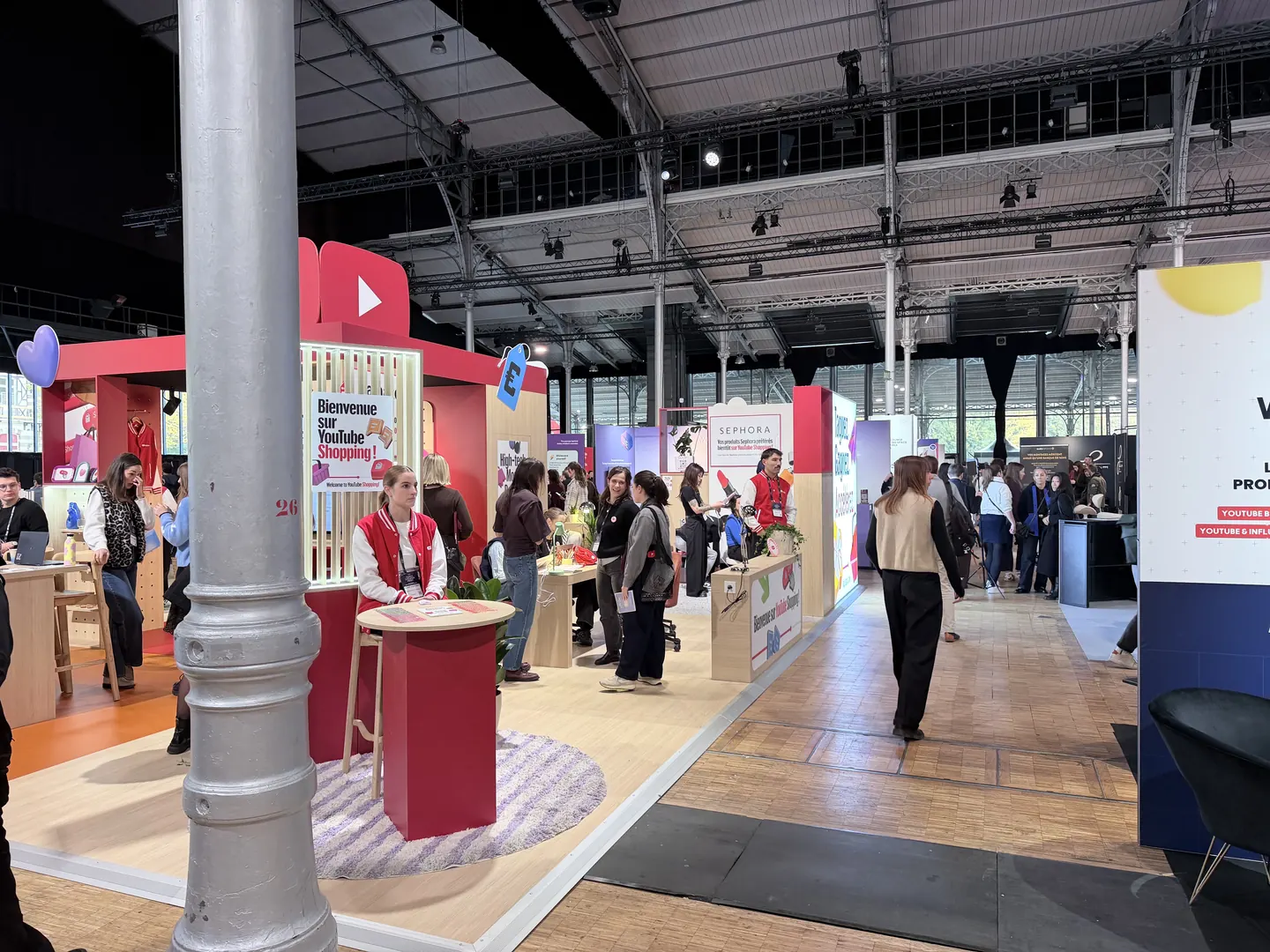
At Paris Creator Week this week, something clicked. On LinkedIn, B2B is less a volume game and more a quality game. In B2C the first question is how many followers you have. In B2B it is who they are, and whether what you say is worth their time. That changes who the creator economy is for: an SME, a boutique law firm or a ten-person accounting practice can build a brand this way without a mass audience.
I should say up front that I run Willow, which helps B2B firms with exactly this, so I have a stake in the answer. But the number stayed with me. If 8,900 followers puts you in the top three of a Belgian niche, what does that mean for the managing partner of a law firm or an accounting practice?
The shift, in numbers
Five years ago, most large-company CEOs were absent from social media. In 2019, 48% of S&P 500 and FTSE 350 CEOs had any social presence, and only about one in four had posted in the past year (Brunswick, via CNBC). By 2023, more than 55% of FTSE 100 CEOs were actively posting on LinkedIn (FTI Consulting).
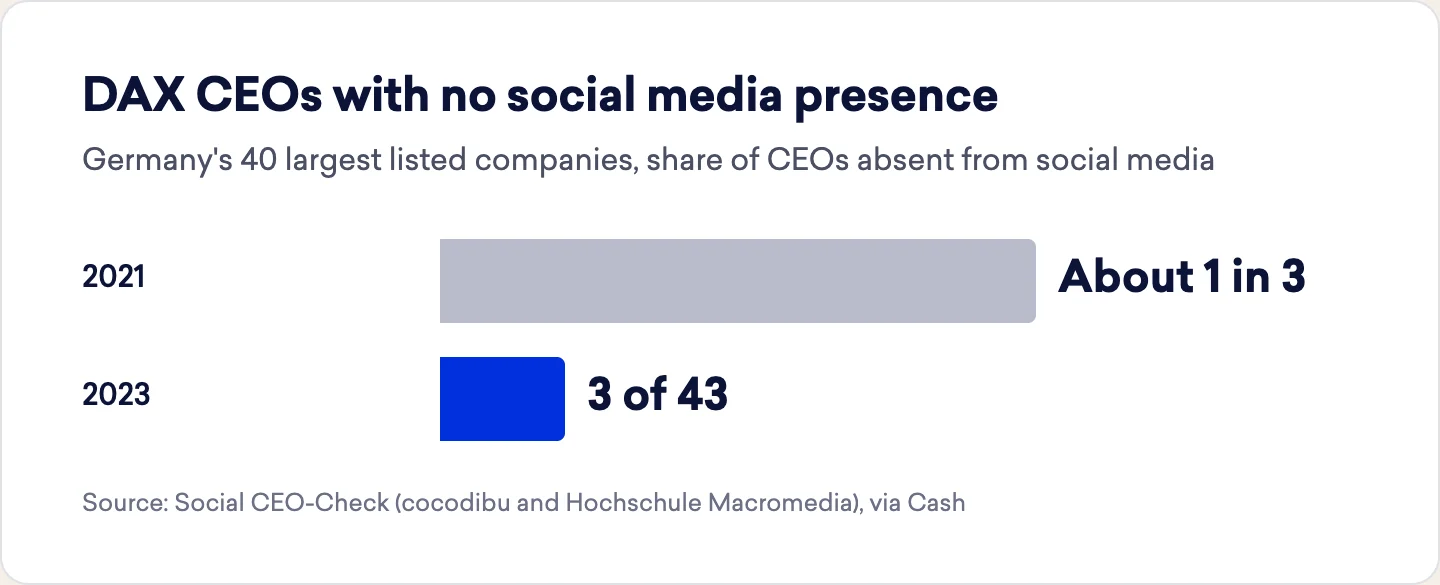
Germany moved the same way. A third of DAX CEOs had no social presence in 2021. By 2023 it was 3 out of 43 (Social CEO-Check by cocodibu and Hochschule Macromedia, via Cash).
LinkedIn data shared with the Financial Times in 2024 showed a 23% rise in CEO posts in a year, with four times the engagement of other members' content. I asked Pierre Le Baud, a tech journalist at LinkedIn News France, how a leader's profile compares with the company page. Every company should test it for itself, he said, but on average a CEO's post gets seven times the visibility of the company's post.
LinkedIn already sees you as a creator. Do you?
When I asked Pierre where LinkedIn draws the line between an executive who posts and an executive who is a creator, he did not see a line:
“For us, any executive is a creator.”Pierre Le Baud, LinkedIn
My first reaction was that this is too broad. Then I realised it depends on who is looking.
From LinkedIn's side, anyone who posts from their own experience is a creator on the platform. Most executives do not see themselves that way. They see someone who shares company news now and then. Citi's Jane Fraser has about 334,000 followers and posted twice last month (Favikon), and of the 100 most-followed people on LinkedIn, 57 are known mainly for a role or an office (Melanie Goodman). The platform counts them as creators. Much of the audience came with the job.
The shift I am arguing for happens in the executive's own head. Once you see yourself as a creator, you start asking a creator's questions: who is this for, which format fits, what can I say that nobody else can. And you start using that position on purpose, for goals you already have: clients, talent and trust.
Why now: the buyer changed
The clearest example is not a tech founder. It is Jon Gray, president of Blackstone, who films himself jogging on business trips. He had more than 266,000 LinkedIn followers by late 2025 (Bloomberg), and his videos average over 100,000 views each (Fortune).
He did not want to do it. Blackstone's head of corporate affairs suggested the videos, and by his own account he resisted for a long time.
This is what one of those runs looks like, from his week in India in October:
What changed is who Blackstone sells to. A firm built on exclusivity is now opening up to retail investors, and a private-equity president in running shoes is how you reach them. That is the rule I take from it:
Executives become creators when the people they sell to change.
Belgium: smaller numbers, same mechanism
In Belgium the names are different and the numbers are smaller. Favikon's ranking of Belgian CEOs is led by Ilham Kadri, then CEO of Syensqo, followed by the founders of ColdIQ and Gentis (Favikon). Founders and scale-up CEOs fill most of the list.
Jürgen Ingels has about 48,000 LinkedIn followers. That is a fifth of Jon Gray's audience, and he is a household name in Flemish business. Thomas Guenter built more than 200,000 followers as a finance creator and now runs a feeder fund that gives investors access to Smartfin's Space & Defense Fund from 100,000 euros (Forbes België).
Belgium has roughly 6.8 million LinkedIn users (NapoleonCat). I am not quoting these follower counts to impress anyone. They show that a modest, relevant audience is enough to matter here. Pierre sees the same movement from inside LinkedIn: big-company CEOs are the most visible, he told me, but startup founders and SME leaders are clearly more and more active.
In your sector, the creator is the partner group
A law firm or an accounting practice has no single CEO to put in running shoes. It has partners. A UK study of law firms on LinkedIn by TBD Marketing found that broad participation matters more than star performers, and that larger firms lean on their corporate brand while smaller firms lean on their people (Legal Futures).
Size is not the advantage you would expect. Among the 200 largest US law firms (the Am Law 200), those ranked 101 to 200 lead on engagement, while the 30 largest have the most followers and the lowest engagement (BTI Consulting).
The Netherlands already has a Top 100 Lawfluencers list (Mr. Online). I could not find a Belgian equivalent for lawyers or for accountants. In those professions here, the channel is still under-used. With less competition for attention, building a good audience is easier today than it will be once everyone has caught on.
Your clients are already looking. In a Hinge study of more than 1,000 professional services buyers, six in ten checked out providers on social media before hiring, and LinkedIn was by far the platform they used most. That was in 2014; it has not become less true since.
The uncomfortable parts
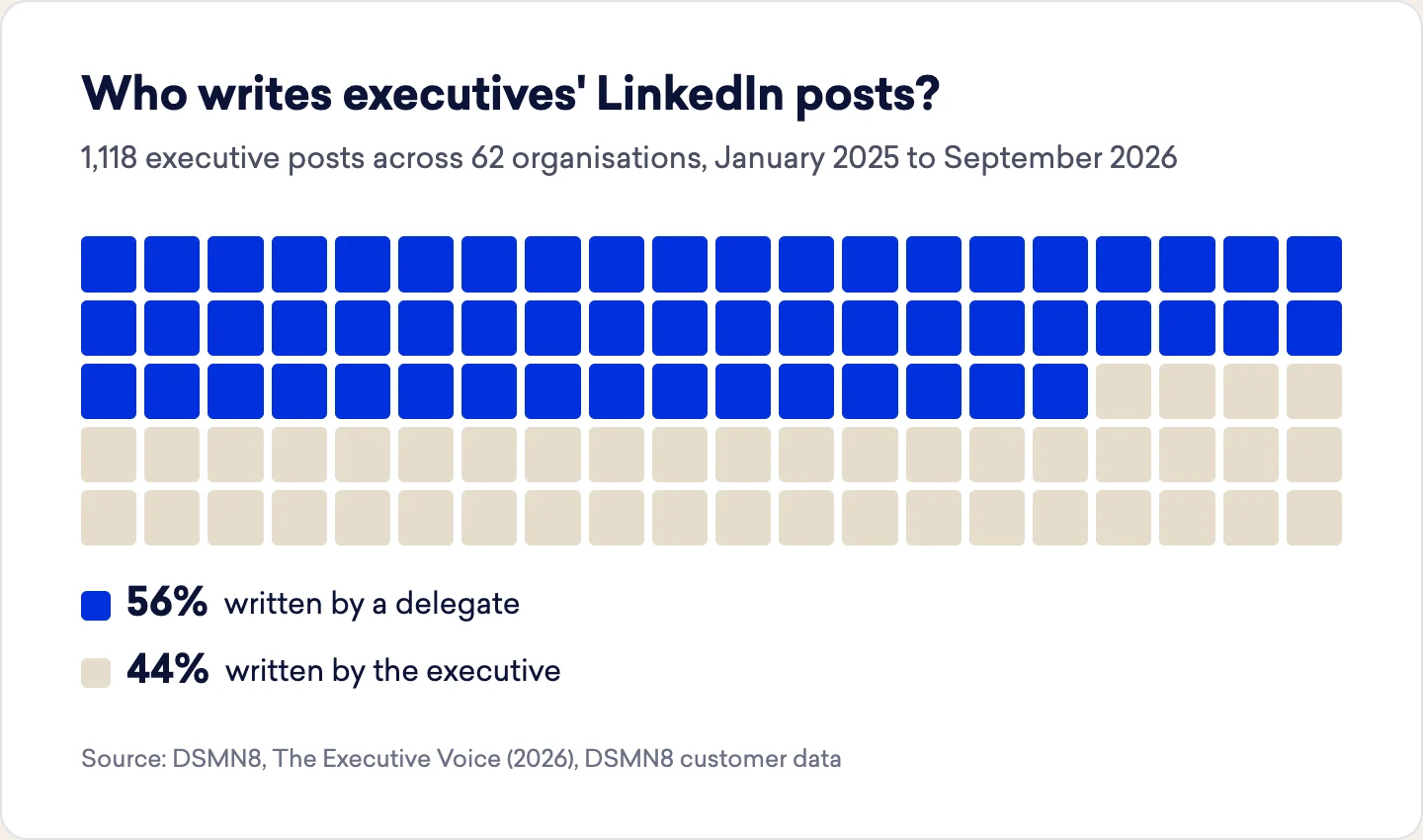
Much of it is not written by the executive. In one dataset covering 62 organisations, delegates wrote 56% of executive posts (DSMN8, customer data 2025 to 2026). LinkedIn's editors know this. Pierre told me they make no distinction, because what they judge is the quality and authenticity of the post itself.
An audience is not demand. Bill Ackman of Pershing Square planned to use his social following to sell a fund IPO meant to raise 25 billion dollars. In 2024 it was cut to between 2.5 and 4 billion, then to about 2 billion, and then pulled (IFR).
A ranking is not reach. My own post about that third place reached 1,539 people. Rankings reward consistency in a niche, not virality. I find that reassuring, because consistency is something a busy partner can manage.
How to start
I asked Pierre what executives most often get wrong. His answer: being “too corporate” and staying on the surface of a topic. LinkedIn members want figures and insight, he said, not only declarations.
That matches how I keep posting while running a company:
- Keep it real. Moments from the actual work, not polished corporate statements.
- Do it on the go. Posting has to fit into the day, not the other way around.
- Work from one plan. A single plan is what keeps you consistent when the week gets busy.
You do not need Blackstone's audience, because it was never about volume. In Belgian law and accounting, a partner with 5,000 of the right followers and something concrete to say every week is already ahead of almost everyone. With executive posting rising every year, that head start will not stay this easy to get.
One thing is still missing: Belgian numbers. Most of the data in this piece comes from the US, the UK, Germany and the Netherlands. We are reaching out to LinkedIn's Benelux editorial team for figures on how executives in Belgium use the platform, and we will share them as soon as we have them.
Pierre Le Baud's statements come from a written exchange with Ludwig Dumont on 5 November 2026. All other figures are linked where they appear. For the session that started this, see what LinkedIn's editorial chief told a room full of creators, and for what the company page is still good for, your company page is the showroom, your people are the conversation.