You've worked through the course. You understand your audience, your niche, your visual identity, and what to post. Now it's time to turn that knowledge into action. This checklist gives you a clear path from setup to daily practice.
One-time setup: define your foundation
Target audience and niche
[ ] Define your target audience — who are they specifically?
[ ] Create a persona with a name, role, challenges, and habits
[ ] Identify their biggest challenges and desires
[ ] Determine where they spend time online
[ ] Clarify what unique value you offer them
[ ] Note what turns them off (jargon, promotion, inconsistency)
[ ] Research who they already trust and follow
Your niche
[ ] List 5-10 topics you could talk about with confidence
[ ] Identify which of those topics address real problems your audience has
[ ] Research who else covers these topics and where the gaps are
[ ] Choose one primary topic to focus on for the next 3 months
One-time setup: optimise your LinkedIn profile
[ ] Upload a professional, high-quality headshot as your profile photo
[ ] Create or choose a banner that communicates your niche or message
[ ] Write a headline under 120 characters with keywords your audience searches for
[ ] Add your professional email to your contact information
[ ] Set your country, region, and city
[ ] Personalise your LinkedIn URL (linkedin.com/in/yourname)
[ ] Write an about section focused on who you help and how — include specific results
[ ] Add your current position and at least two previous roles with achievements
[ ] Upload media samples: presentations, case studies, or articles
[ ] Add at least 5 relevant skills and ask colleagues for endorsements
[ ] Enable Creator Mode for newsletters, follow button, and featured hashtags
[ ] Add a call-to-action link to your profile (website, booking page, or lead magnet)
[ ] Enable the Services feature under "Open to"
[ ] Sync your address book to find existing contacts on LinkedIn
Monthly planning
[ ] Set 1-2 specific, realistic goals for the month (e.g. "post twice a week" or "grow connections by 50")
[ ] Review what's happening in your industry — any trends, regulatory changes, or events to comment on?
[ ] Check competitor and peer content — what are they posting? What's working?
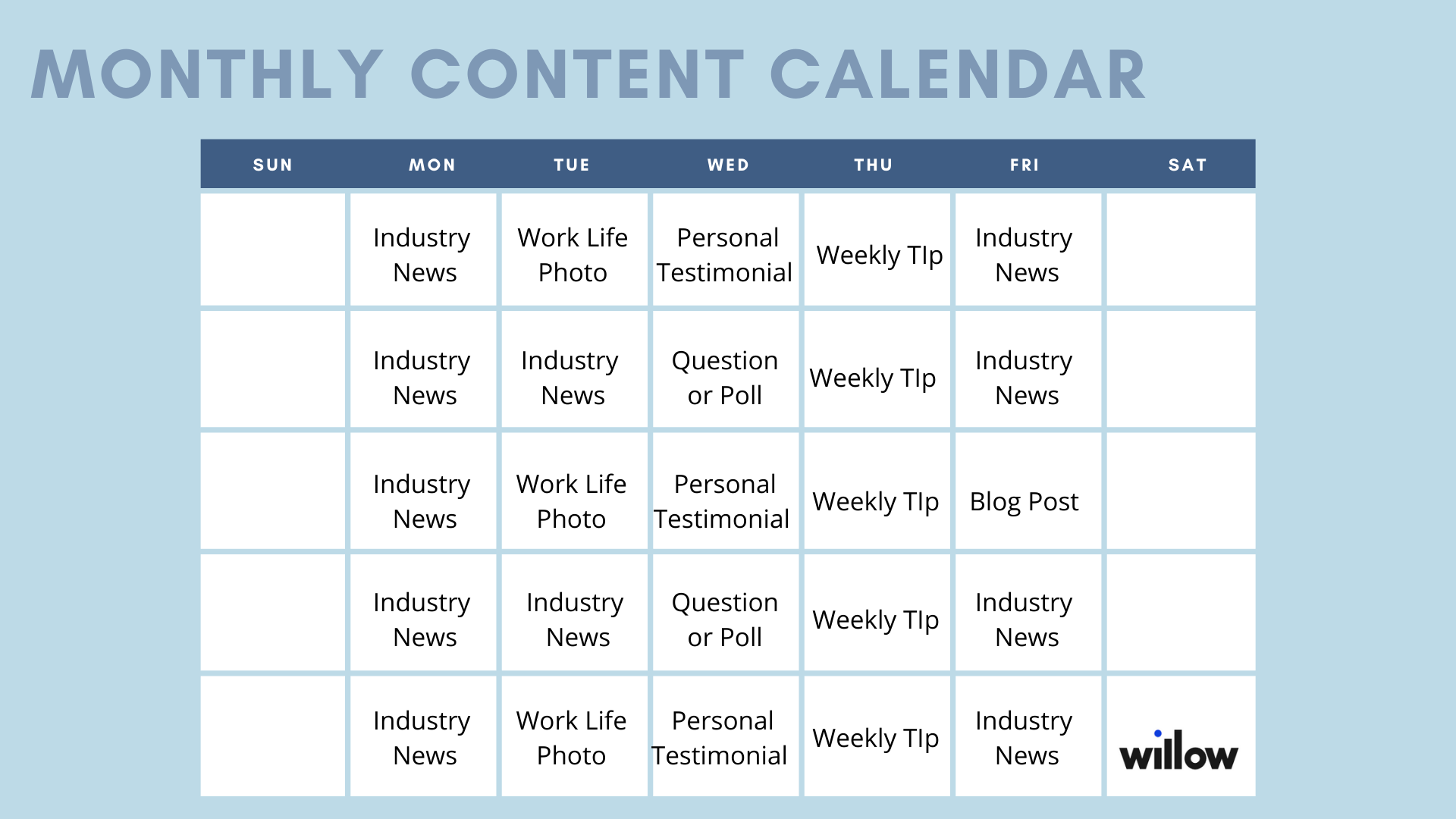
[ ] Plan your content categories for the month: educational, personal, curated, client stories
[ ] Fill in your content calendar with topics, formats, and posting dates
[ ] Create or prepare visuals, captions, and links for each post
[ ] Review last month's analytics — which posts performed well? Which fell flat?
[ ] Adjust your strategy based on what the data shows
Weekly routine
[ ] Prepare and schedule this week's posts (or confirm they're already queued)
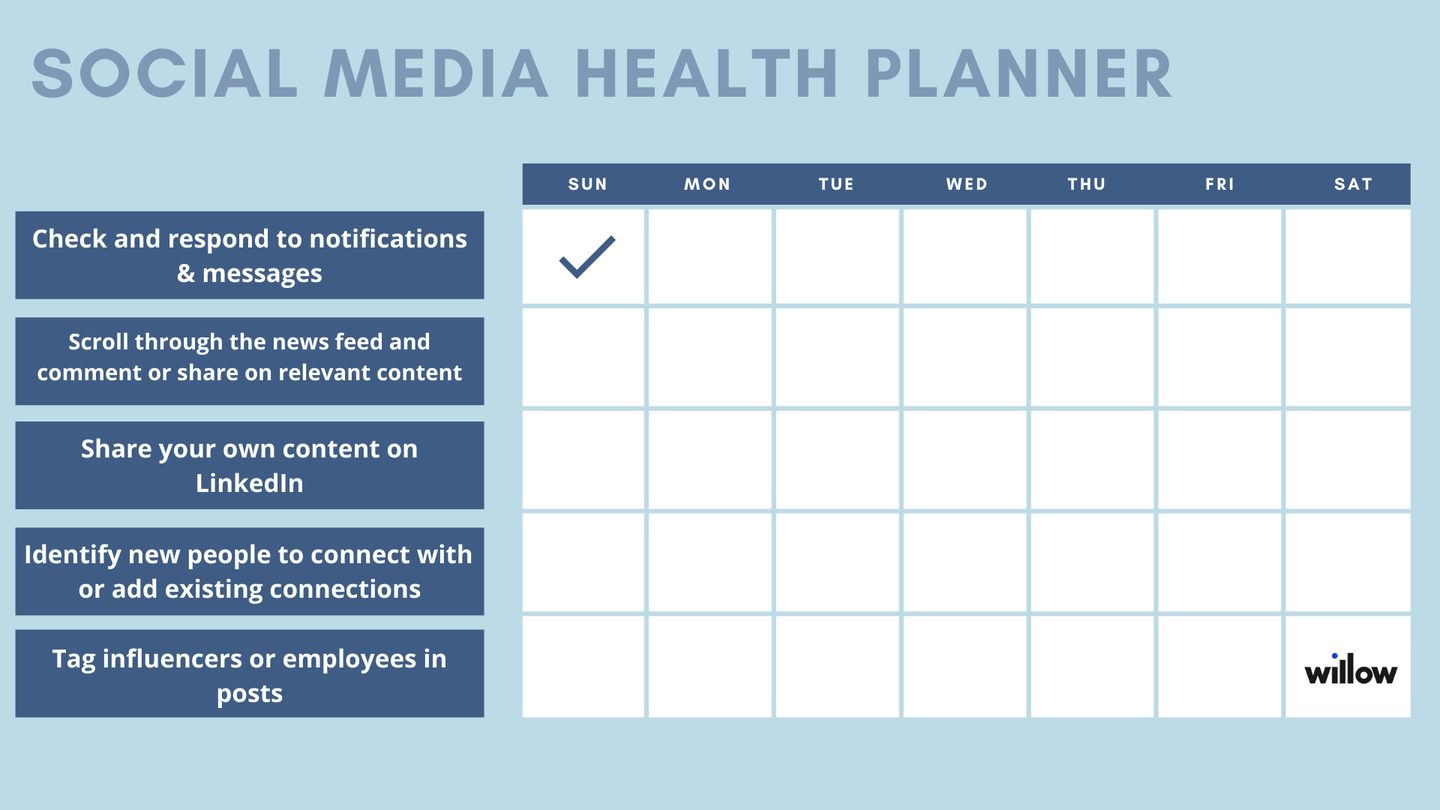
[ ] Identify 3-5 people to connect with — event contacts, industry peers, or prospects
[ ] Spend 15-20 minutes engaging: comment on posts, respond to comments on yours, congratulate connections on milestones
[ ] Share or tag relevant content from people in your network
Daily habits (15-20 minutes)
[ ] Check and respond to notifications and messages — 5 minutes
[ ] Scroll your feed and leave 2-3 meaningful comments — 10 minutes
[ ] Post your scheduled content (or let Willow handle it)
[ ] Respond to any comments on your posts the same day
Content ideas to get you started
If you're staring at a blank screen, here are post types you can rotate through:
- Weekly tip: Share one piece of practical advice from your area of expertise. An accountant might share a tax deadline reminder. A recruiter might share an interview preparation tip.
- Industry news: Find a relevant article through Willow's news tab and share it with your own take. This is the fastest way to stay active without creating everything from scratch.
- Personal reflection. A lesson learned, a career milestone, a project that taught you something. Keep it professional but honest.
- Question or poll. Ask your audience about a topic in your niche. "What's your biggest challenge with [topic]?" generates engagement and gives you ideas for future posts.
- Client story. Celebrate a result, describe how you solved a problem, or share a testimonial (with permission). Social proof builds trust.
- Behind the scenes. A photo from your workspace, a snapshot from a team lunch, or a quick selfie at an event. Posts with faces get more engagement than posts without them.
The most important step is the first one. Pick a date, publish your first post, and build from there. Every personal brand started with a single post and the decision to show up consistently.