Social media for construction and real estate.

Willow is a social media tool for construction companies, contractors, developers and real estate agencies. It drafts posts for LinkedIn, Facebook and Instagram from your projects and your website, for the people you want to reach: buyers, clients and the technical profiles you're trying to hire. A coach helps you keep posting between launches.

Why social media stalls in construction and real estate.

Rarely for lack of projects to show. Usually because social media is somebody's side job.

The usual pattern.

What changes with Willow.

It's somebody's side job. Social media sits with one person next to a full-time role, so a post goes out when there's a free hour, and the busy weeks have none.

Prepare in a quiet hour, publish all month. Posts are written in a batch and scheduled to LinkedIn, Facebook and Instagram at once, then left to run. Willow Create drafts from your website and project news, so nobody starts from scratch.

Busy on site, quiet online. A launch or a handover gets a post. The weeks in between get nothing, and the page goes silent until the next project.

Something to post between projects. Tips, site updates and short series drafted from what you already publish, so the calendar has something in it in the weeks between launches.

Buildings, buildings, buildings. The feed shows projects and listings but never the people behind them, so it does little for the next hire.

The people who build it. Your coach helps you mix site updates and finished projects with team moments, the posts that reach the technical profiles you're competing for.

Several companies, no overview. Group companies, departments and three channels each run on their own, and nobody sees what goes out where.

One calendar for the whole group. Every company page and channel in one workspace. HR or other teams can draft their own posts, and marketing checks tone and timing before they go out.

What works for construction and real estate on social media.

What we have learned from coaching builders, developers and agencies, and from the numbers. Each has a longer read behind it.

A steady week beats a burst.

We analysed 43,738 posts from 488 company pages. Pages that posted in bursts got 6 times fewer impressions per post than pages with a steady weekly rhythm, even though they posted more. Read the analysis

A referral checks you first.

Work still comes through referrals, but the referred client looks you up before they call. In one study of professional services firms, including architecture, engineering and construction, 51.9% of referred buyers had ruled a firm out before ever speaking to it. Why a quiet page costs you

Mix the site with the team.

Vulsteke's best posts over a year were site updates, team moments and finished projects side by side. Expertise and employer branding work better together than apart. Read the Vulsteke story

Project moments draw buyers.

At Novus Projects, announcements of new developments performed best and drew real interest from buyers. Plan them in the calendar, and the audience is already there when a project launches. Read the Novus Projects story

Hire through the same feed.

Candidates research an employer before they apply. Show the site, the team and the work, so a technician can picture the job before the first interview. Employer branding on social media

Let more teams contribute.

At Groep Verhelst, HR and the sustainability team draft their own posts and marketing reviews them. That is how one group runs more than 800 posts a year across its company pages. Read the Groep Verhelst story

What happens when a builder keeps posting.

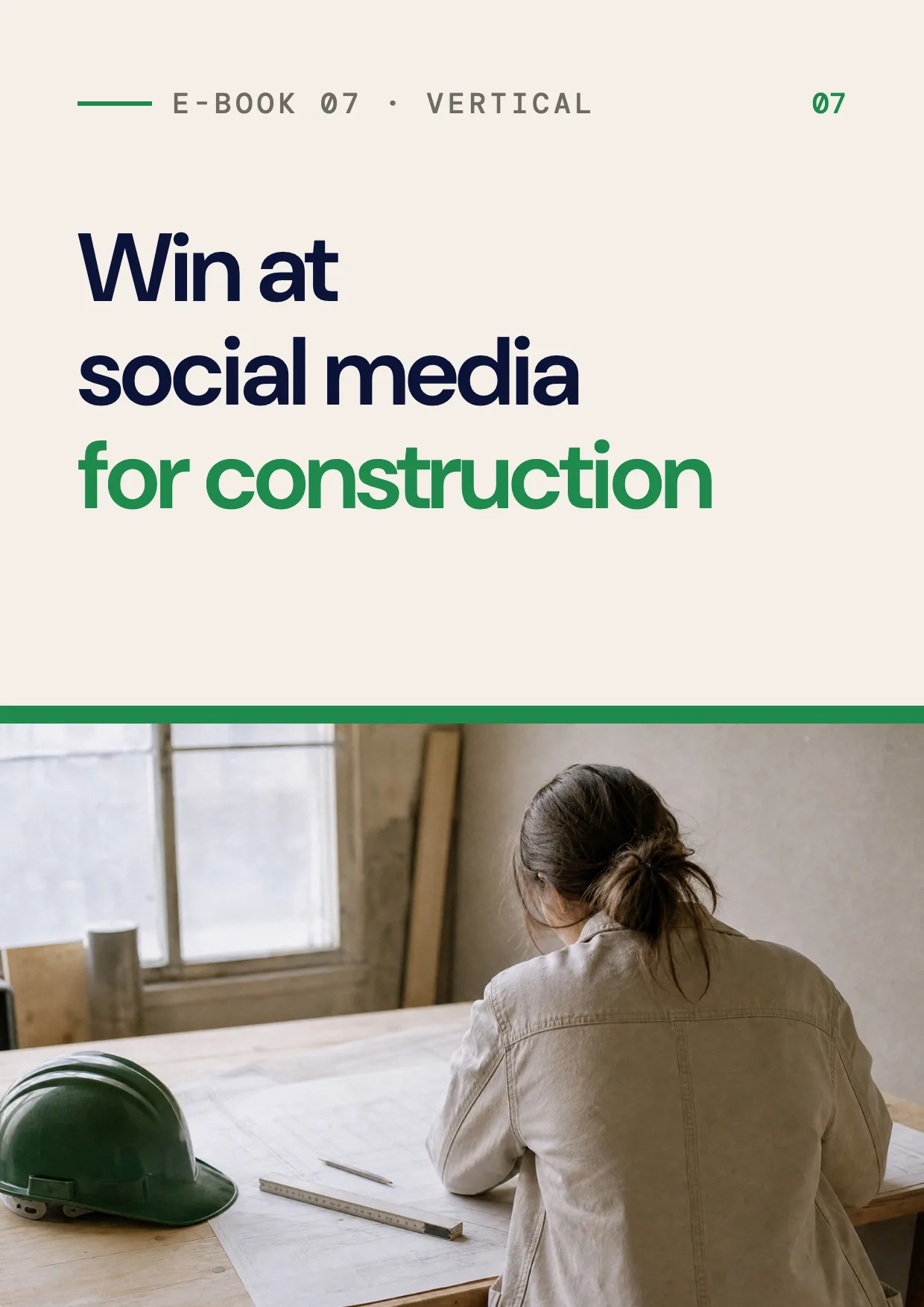
Cover of the e-book "Win at social media for construction": title above a photo of a woman at a workbench with plans, a green hard hat and a ruler.

Win at social media for construction

Construction runs on trust and reputation. Learn how to keep both growing — across the company page, the people on site and every project cycle — without losing time on social.

Download the free e-book

Questions builders and developers ask us.

What should a construction company post on social media?
A mix of site updates, project completions and team moments. At Vulsteke, the posts that did best over a year were exactly that mix. For a developer or agency, new projects and sales phases draw the most attention, with tips and news in the weeks between. A feed of only finished buildings shows what you build, not who builds it. Read the Vulsteke story.
How often should we post?
Once a week, every week, as a floor. In Willow's analysis of 488 company pages, pages that posted in bursts got 6 times fewer impressions per post than pages with a steady weekly rhythm, even though they posted 34% more. An even rhythm matters more than a high total.
Should we be on LinkedIn, Facebook or Instagram?
Usually all three, for different people. At Novus Projects, buyers regularly mention a Facebook or Instagram post when they get in touch, while business clients, partners and office staff look on LinkedIn. Willow schedules one post to all three channels at once, so being on three doesn't take three times the work.
We have several companies and brands. Can one team run them all?
Yes. Every company page and channel sits in one workspace with one calendar. At Groep Verhelst, colleagues from HR and the sustainability team draft their own posts, and marketing checks tone and timing before anything goes out. Read the Groep Verhelst story.
What does Willow cost for a construction or real estate company?
Usually less than an agency, and more than a simple scheduling tool. An agency bills for its hours, and a scheduling tool only publishes what you write yourself. Willow is one fixed plan: drafts, a calendar, analytics and a coach. Exact plans and prices are on the pricing page.
Where does Willow store our data?
On EU servers. Willow is GDPR-compliant and built in the Benelux.

See how Willow would run at your company.

Thirty minutes, with your projects, your company pages and your channels in mind.

“The growth in reach, followers and engagement confirms that a consistent approach works. But for us, the biggest value is in the way we now collaborate.”
LV Linda VerkempinckMarketing Manager · Groep Verhelst